A watch component enquiry that arrives with a drawing, a target volume and a finish reference can be priced the same day. One that says only "need dial rings, send rate" cannot be priced at all — and the back-and-forth that follows is usually what people remember as a slow supplier. This guide sets out exactly what we need to quote, and more usefully, what each piece of information actually changes about the number you get back.
We have been quoting watch components from our Greater Noida plant since 2006, for OEM brands including Titan, Timex and KDDL as well as smaller private-label buyers. The checklist below is the same one our estimating team works through internally.
1. A drawing, a sample, or both
This is the one item nothing else can substitute. We can work from a 2D drawing (PDF, DWG, DXF), a 3D CAD file (STEP, IGES, Parasolid), or a physical sample we reverse-engineer. A photograph with a ruler beside it is not enough for a tolerance-critical part, though it is a perfectly good starting point for a first conversation.
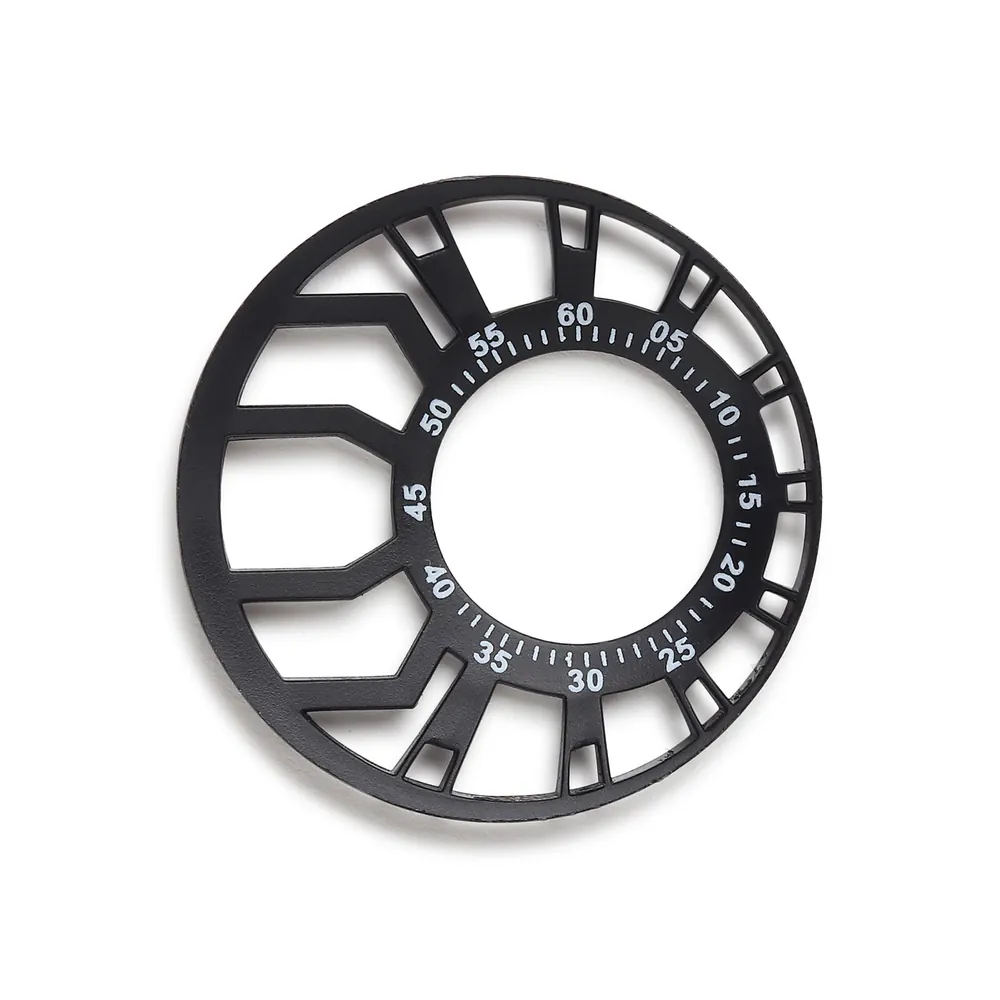
What the drawing decides: whether an existing mould can be used, whether a new tool is needed, and how many cavities that tool should have. If you are sourcing wholesale watch dial rings in a standard 28–45 mm diameter, there is a reasonable chance we already hold suitable tooling. A bespoke profile means a tool built in our own tool room in Greater Noida, and that is a separate line on the quote.
2. Material and grade, or the application
If you know the material, tell us: ABS, polycarbonate, Nylon 6/6, POM, PA66 and PU all behave differently in the mould and cost differently per kilogram. If you do not know, describe the application instead — is the part visible through the crystal, does it take a snap-fit load, does it need to survive a drop? We will suggest a grade.
Material choice moves the price in two directions at once. A cheaper polymer lowers the per-piece cost but may need a slower cycle or a higher reject rate on cosmetic parts. For bulk polycarbonate watch glass, optical-grade material is not optional, so there is little room to trade down.
3. Finish, colour and any printing
Polished, matte, textured, metallic-plated, chrome, gold PVD, two-tone — each is a different downstream operation and some are outsourced steps with their own minimums. Colour should come with a Pantone or RAL reference, or a physical sample we can match against.
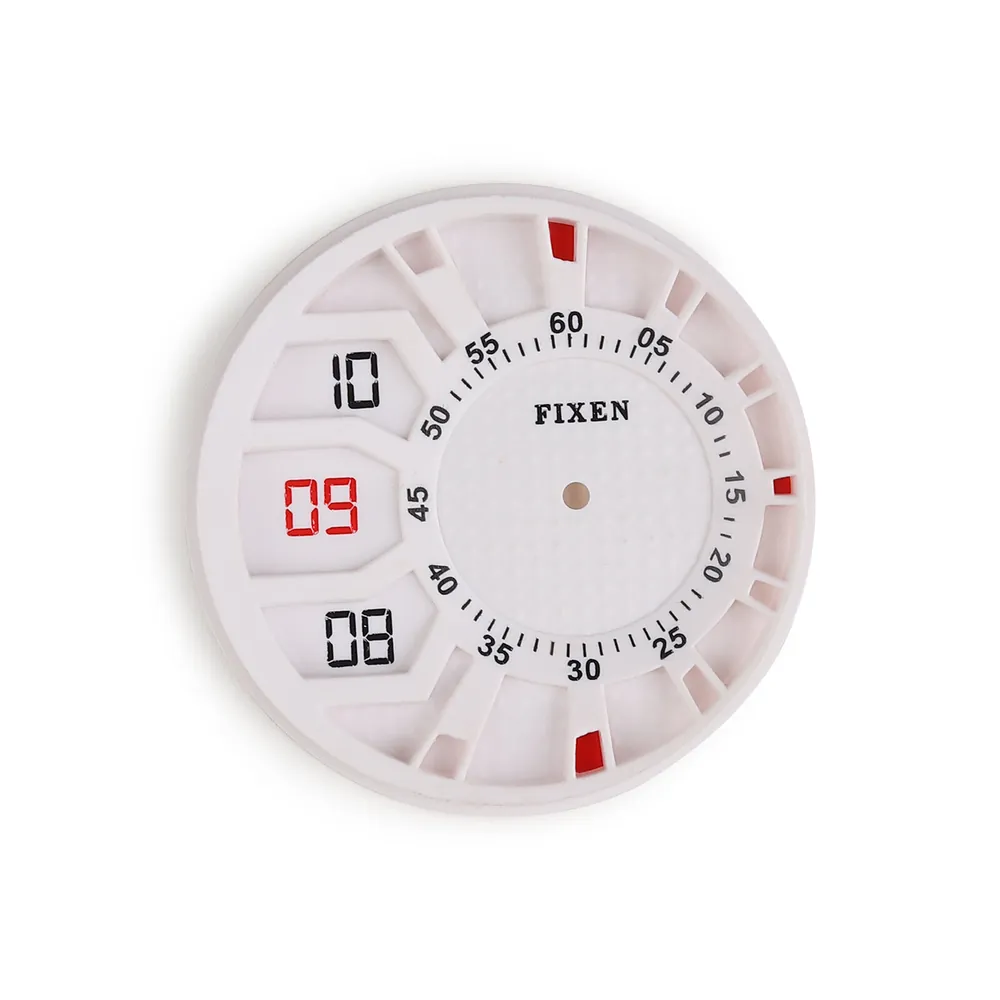
If the part carries a logo or indices, say so early and send the artwork. Pad printing jobwork runs up to four colours in a single pass at ±0.1 mm registration, and the number of colours changes both the setup cost and the cycle. A dial quoted as unprinted and then revised to four-colour is effectively a new quote.
4. Quantity — first order and annual
Give us both. The first-order quantity tells us how to schedule the run; the annual figure tells us how many cavities the tooling should have, which is usually the single biggest lever on per-piece price. A part quoted for 2,000 pieces a year and the same part quoted for 200,000 are different manufacturing problems.
On minimums: watch dial rings start at 500 pieces. Most other components are quoted per drawing and volume rather than against a fixed MOQ, and we will take a lower pilot quantity for a first order while a programme is being validated. Our plant capacity is 50 lakh+ pieces a month across 25 × 50 T machines, so volume is rarely the constraint — tooling lead time usually is.
5. Tolerances that actually matter
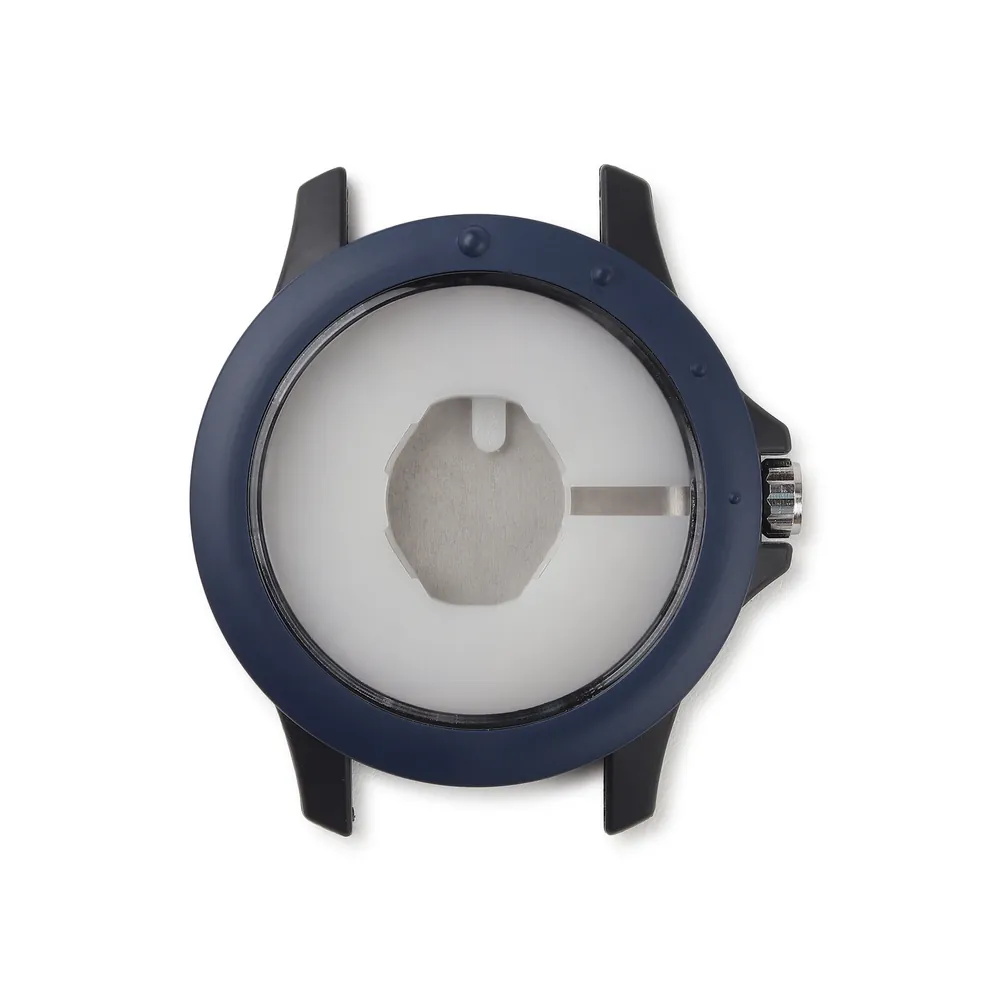
Mark the critical dimensions rather than applying a blanket tolerance to the whole drawing. We hold ±0.05 mm on critical features as standard, ±0.03 mm on movement holders and spacer rings where fitment is unforgiving, and ±0.08 mm on larger watch cases. Asking for ±0.02 mm across every dimension when only two features need it will raise the price for no benefit.
6. Your timeline, honestly
Tell us the date you need parts on your assembly line, not the date you would like samples. Working backwards from that is what tells us whether a job is feasible at all.
Typical lead times, once a sample is approved: 7–14 working days for dial rings, straps and movement holders on existing tooling; 10–21 days for cases; 10–18 days for printed dials and bezels; 5–10 days for standard PC glass. New tooling adds 3–8 weeks depending on cavity count, and a mould repair or modification is usually 3–14 days.
7. Packaging, documentation and delivery
Often forgotten and occasionally expensive. Do you need each piece separated, batch labelling, inspection records with the consignment, retail-ready packing? Are you collecting ex-works, or do you need us to arrange freight? We export to the Philippines, Sri Lanka and Switzerland, so export documentation is routine, but it needs to be priced in rather than discovered later.
What you get back
With the above in hand, a quote normally goes out within one working day for parts, and within 48 hours for tooling and mould repairs. It will state the per-piece price at your volume, tooling cost separately if a new mould is required, the minimum order, the lead time from sample approval, and what the price assumes — because an assumption you disagree with is far easier to correct than a number with no reasoning behind it.
If a detail is still undecided, send the enquiry anyway and say what is open. We will quote the cases around it, which is usually more useful than waiting a fortnight for a specification to be finalised.
Ready to price a part? Send your drawing and volumes and we will come back with a full breakdown, or browse the full range of watch components we supply.
Tags
Related pages